
Giant colony of fossil sea lilies on invisible trunk of driftwood
Article number
F0118
Description
Geological age: Lower Jurassic, ca 180 million years
Locality: Holzmaden, Duitsland
Crinoids are marine animals belonging to the Echinodermata. They are related to the starfish, sea urchins, brittle stars and sea cucumbers.
They first appeared on Earth in the Ordovician, around 480 million
years ago, and quickly evolved into one of the most dominant species at that time.
There are two types of crinoids, the free-swimming ones that are called feather stars because of their appearance, and the crinoids that are attached to the bottom with a stem, which are understandably called sea lilies because they look like flowers.
They use this "flower" to filter food particles from the water.
While some members of the Echinodermata can reproduce by cloning, crinoids cannot.
They reproduce by means of sperm and eggs making them rather vulnerable.
But on the other hand, they are able to regenerate body parts that they lose, for example by a predatory fish. This might explain the success of the species in geological history.
Although they used to be present in large numbers in the world's oceans, crinoid fossils are quite rare. This is because they almost always fall apart after dying.
Therefore, we often only find pieces of the "flower" or parts of their very typical pentagonal body.
Since 1963, our family business travels the world, visits mines and personally selects each and every acquisition.
We recently acquired this stunning plate of sea lilies from an elderly gentleman who discovered this particular fossil nearly 40 years ago with a close friend in a famous slate quarry in Holzmaden, Germany. After holding onto the fossil for decades, he decided to meticulously prepare it over the past two years, revealing its true beauty. Additionally, he crafted an ingenious wallmount system to showcase the fossil's elegance.
On the plate you see mostly crinoids. Shells and driftwood are hidden underneath. Sea lilies usually look round like a parasol. The otherwise typical bowl shape of crinoids occurs when the log drifts and pulls the crinoids across the ground. The round shape occurs when the water is nearly still. The shallow Jurassic Sea was calm to very calm. You can also see it in the stones from Holzmaden. The slate slabs consist of many parallel thin layers.
Although the log is hidden, its ends are marked by a group of lilies whose stems point to the right: a sign that there was a very slight current (to the left) during the first part of the fossilization process.
History of this tree trunk find
About 300 million years ago, the supercontinent "Pangea" was formed, which slowly disintegrated about 50 million years into the Jurassic Age. This created a giant sea called the "Jurassic Sea," roughly the size of central Europe. The climate everywhere on earth was subtropical, nowhere on earth was ice!
The trees at that time were conifers and ginkgo-like trees. Trees uprooted by storms ended up in this Jurassic Sea where the part that was underwater was often populated by mussels and later by sea lilies. These crinoids rooted their stems in the underside of the driftwood and used their crown to trap planktonic creatures. The stem sucks up water; the shells and lilies contain lime, which increases its specific gravity. Eventually, the whole thing sinks and enters the anaerobic zone. The inhabitants suffocate from it. At the bottom, first the lilies, then the shells, then the bottom of the log sink into the sediment. The entire package is continuously covered, squeezed and eventually petrified.
180 million years later, the colony was discovered and prepared by collectors in a quarry in southern Germany, 350 meters above sea level.
Meanwhile, the Jurassic Sea had evaporated. The Atlantic Ocean emerged between North America and Europe.
The excavation and preparation process
After salvaging endless small pieces, the top is first marked. After the pieces are sorted and grouped, an immense puzzle, they are glued together and preparation of the bottom begins. The reason is their better state of preservation. The top side, facing the water, has been exposed to waves and scavengers. The underside is in the sediment, which has allowed it to petrify much more peacefully and thus has become more stable in composition.
Below is a drawing made by the preperator of this fossil. The drawing shows how a sea lily lived and eventually fossilized.
Properties
General
| Dimension (hxwxd) | 100.0 x 320.0 x 10.0 cm |
| Weight (kilo) | 110 |
Related products
| Product | Properties | Price | ||
|---|---|---|---|---|
|
F0032
|
Origin (country)
South Dakota, USA
Dimension (hxwxd)
22.0 x 60.0 x 39.0 cm
|
Available
|
|
|
F0022
|
Origin (country)
South Dekota
Dimension (hxwxd)
33.0 x 40.0 x 16.0 cm
Weight (kilo)
11.5
|
€ 5.250,00
€ 4.338,84
excl. VAT
Available
|
|
|
F0027
|
Origin (country)
Siberia
Dimension (hxwxd)
52.0 x 15.0 x 24.0 cm
|
Available
|
|
|
F0059
|
Origin (country)
UK
Dimension (hxwxd)
23.0 x 37.0 x 10.0 cm
Weight (kilo)
11
|
€ 4.000,00
€ 3.305,79
excl. VAT
Available
|
|
|
F0058
|
Origin (country)
United Kingdom
Dimension (hxwxd)
32.0 x 26.0 x 8.0 cm
Weight (kilo)
6.5
|
€ 3.700,00
€ 3.057,85
excl. VAT
Available
|
|
|
F0073
|
Origin (country)
Green river formation, Wyoming, USA
Dimension (hxwxd)
60.0 x 81.0 x 3.5 cm
|
€ 9.500,00
€ 7.851,24
excl. VAT
Available
|
|
|
F0064
|
Origin (country)
Schlaifhausen, Germany
Dimension (hxwxd)
13.0 x 28.0 x 27.0 cm
Weight (kilo)
13.4
|
€ 730,00
€ 603,31
excl. VAT
Available
|
|
|
F0023
|
Origin (country)
Madagascar
Dimension (hxwxd)
4.0 x 28.0 x 26.0 cm
Weight (kilo)
8
|
Available
|
|
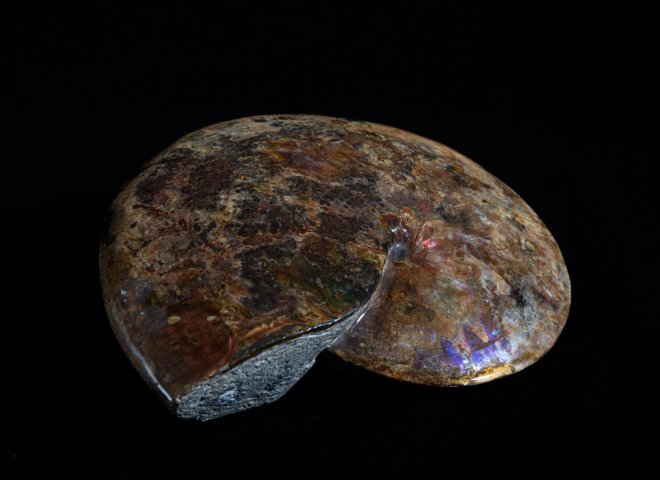
|
F0083
|
Origin (country)
South Dakota, USA
Dimension (hxwxd)
5.0 x 22.0 x 7.0 cm
Weight (kilo)
2
|
€ 2.900,00
€ 2.396,69
excl. VAT
Available
|
|
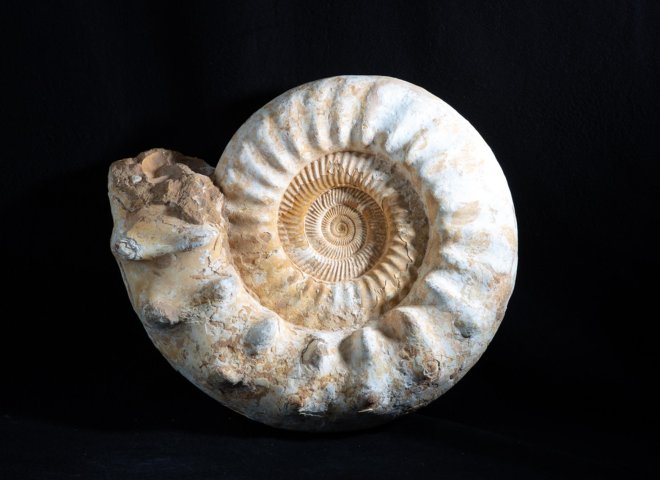
|
F0084
|
Origin (country)
Madagascar
Dimension (hxwxd)
18.0 x 35.0 x 38.0 cm
Weight (kilo)
24
|
€ 3.000,00
€ 2.479,34
excl. VAT
Available
|
|
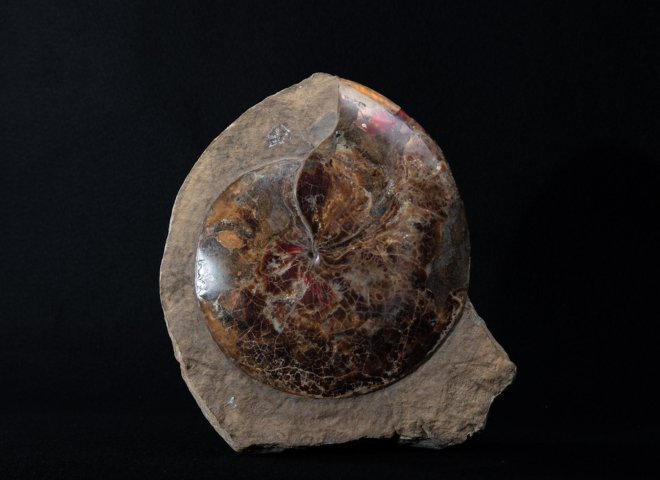
|
F0095
|
Origin (country)
South Dakota, USA
Dimension (hxwxd)
13.0 x 23.0 x 19.0 cm
Weight (kilo)
7
|
€ 1.850,00
€ 1.528,93
excl. VAT
Available
|
|
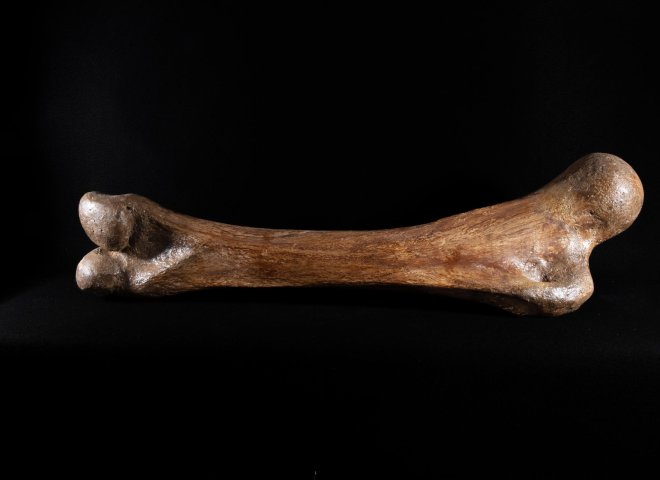
|
F0114
|
Origin (country)
The Netherlands
Dimension (hxwxd)
23.0 x 99.0 x 26.0 cm
Weight (kilo)
16
|
€ 2.400,00
€ 1.983,47
excl. VAT
Available
|
|
|
F0115
|
Origin (country)
The Netherlands
Dimension (hxwxd)
152.0 x 13.0 x 13.0 cm
Weight (kilo)
33
|
Available
|
|
|
F0119
|
Origin (country)
North Sea, The Netherlands
Dimension (hxwxd)
239.0 x 84.0 x 84.0 cm
Weight (kilo)
96
|
Available
|